Siwa Oasis is the most remote place in Egypt you can actually visit, and it is worth every hour of the drive
Siwa Oasis is the most remote place in Egypt you can actually visit, and it is worth every hour of the drive
Siwa Oasis sits in the far west of Egypt, about 30 miles from the Libyan border and a full day by road from Cairo. It is a Berber town with its own language, a melted mud-brick fortress called Shali, the temple where Alexander the Great was told he was the son of a god, turquoise salt lakes you float in, and the Great Sand Sea starting at the edge of the palm groves. It is not a day trip and it is not a two-night stopover. You need three nights, a private car, a driver who knows the dunes, and the cooler months from October to April. Here is how it actually works.
Where Siwa is, and why it feels like a different country
Almost everything a visitor sees in Egypt runs along the Nile or the Red Sea. Siwa is the exception. It lies in the Western Desert, roughly 350 miles west of Cairo and 190 miles south of the Mediterranean at Marsa Matruh, in a depression below sea level. Until a paved road arrived in the 1980s it took days to reach, so the oasis kept its own language, architecture and dress.
The people are Amazigh, the group usually called Berber, and they speak Siwi, a Berber language unrelated to Arabic. Siwa is the easternmost Amazigh community in the world, cut off by hundreds of miles of sand from its cousins in Libya and the Maghreb.
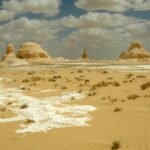
What you see on arrival is a sea of date palms and olive trees fed by hundreds of springs, white salt crusts between the groves, and a wall of golden dunes on the southern horizon. After Cairo it is a shock. A good one.
The Oracle of Amun and the day Alexander walked in
On a rock outcrop in the village of Aghurmi, a few minutes east of town, stand the ruins of the Temple of the Oracle of Amun. By the time the Greeks were writing about it, the oracle here was ranked with Delphi as a voice worth crossing a sea to consult.
In 331 BC Alexander the Great, fresh from taking Egypt from the Persians and founding Alexandria, marched across the desert to ask it a question. The priest greeted him as the son of Amun, and Alexander left Siwa a god-king with a divine claim to Egypt. He never said what he asked.
The temple today is a compact ruin you climb through in half an hour, with a view over the palms that explains why a god would live here. A short walk away stands a single carved wall of the Temple of Umm Ubayda, blown up in the nineteenth century for building stone. Pair it with the city Alexander founded on the coast and you have the whole story in one trip.
Shali, the salt fortress that melted in the rain
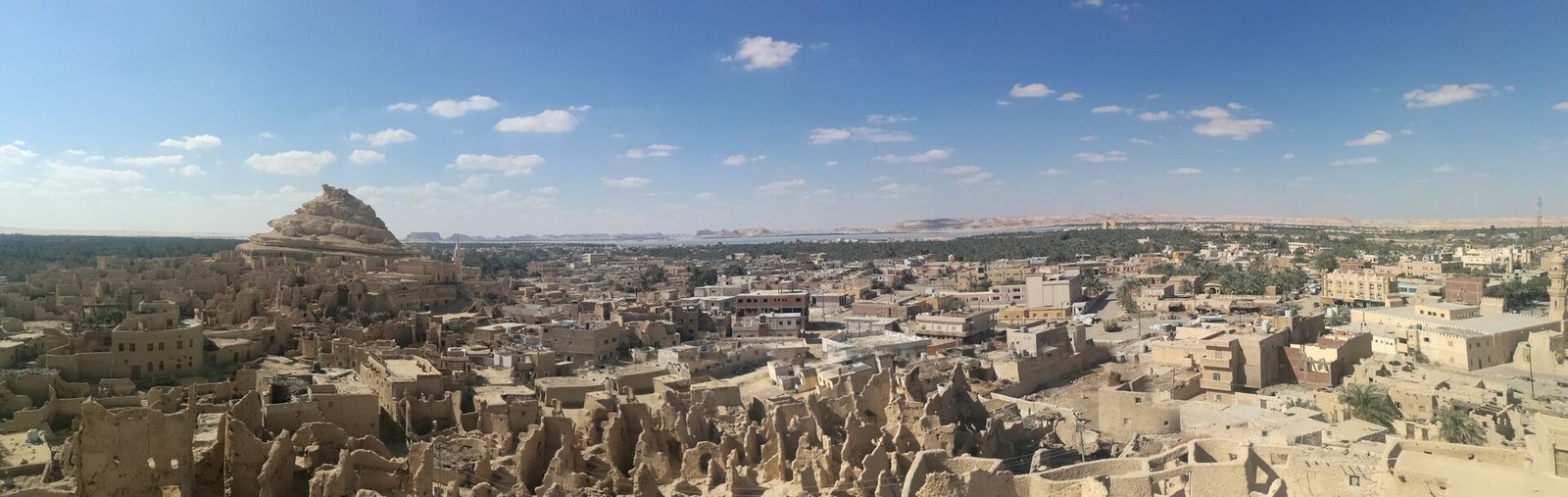
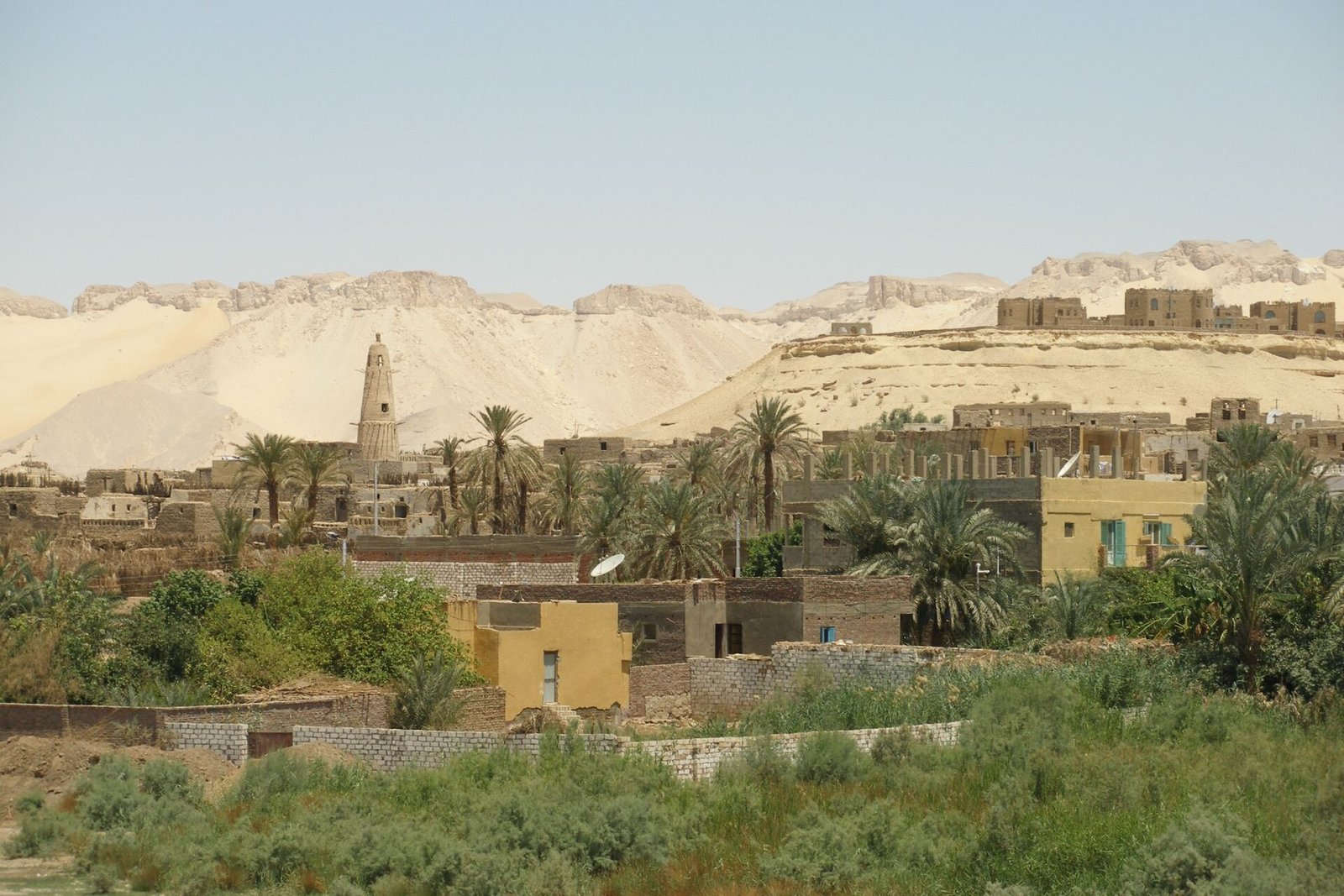
The center of Siwa town is dominated by what looks like a sculpted mountain of mud. That is Shali, the old walled town, founded in the thirteenth century when the families of the oasis moved onto one defensible hill. For 700 years almost everyone in Siwa lived inside it.
It was built from kershef, blocks of salt cut from the lake shores and bound with mud and palm trunks. Kershef insulates superbly and lasts for centuries where it may not rain for years. Its one weakness is water. In 1926 three days of heavy rain dissolved the walls, houses collapsed, and the population moved out to build the town you see around it today.
What remains is a ghost city you can walk into. Climb it at the end of the afternoon. From the top you have the whole oasis at your feet: palms, white lake shores, the Mountain of the Dead to the north and the first dunes to the south. It is one of the great viewpoints in Egypt and it is on almost no standard itinerary.
The Mountain of the Dead and Cleopatra's spring
A mile north of Shali is Gebel al Mawta, the Mountain of the Dead, a conical hill honeycombed with rock-cut tombs from the 26th Dynasty through the Roman period. Families sheltered in them from air raids during the Second World War, which is how the painted ones came to light. Ask the guardian to open the tomb of Si Amun, a Greek-Egyptian merchant, which has the best painting in the oasis. Bring a flashlight and a small tip.
Cleopatra's spring
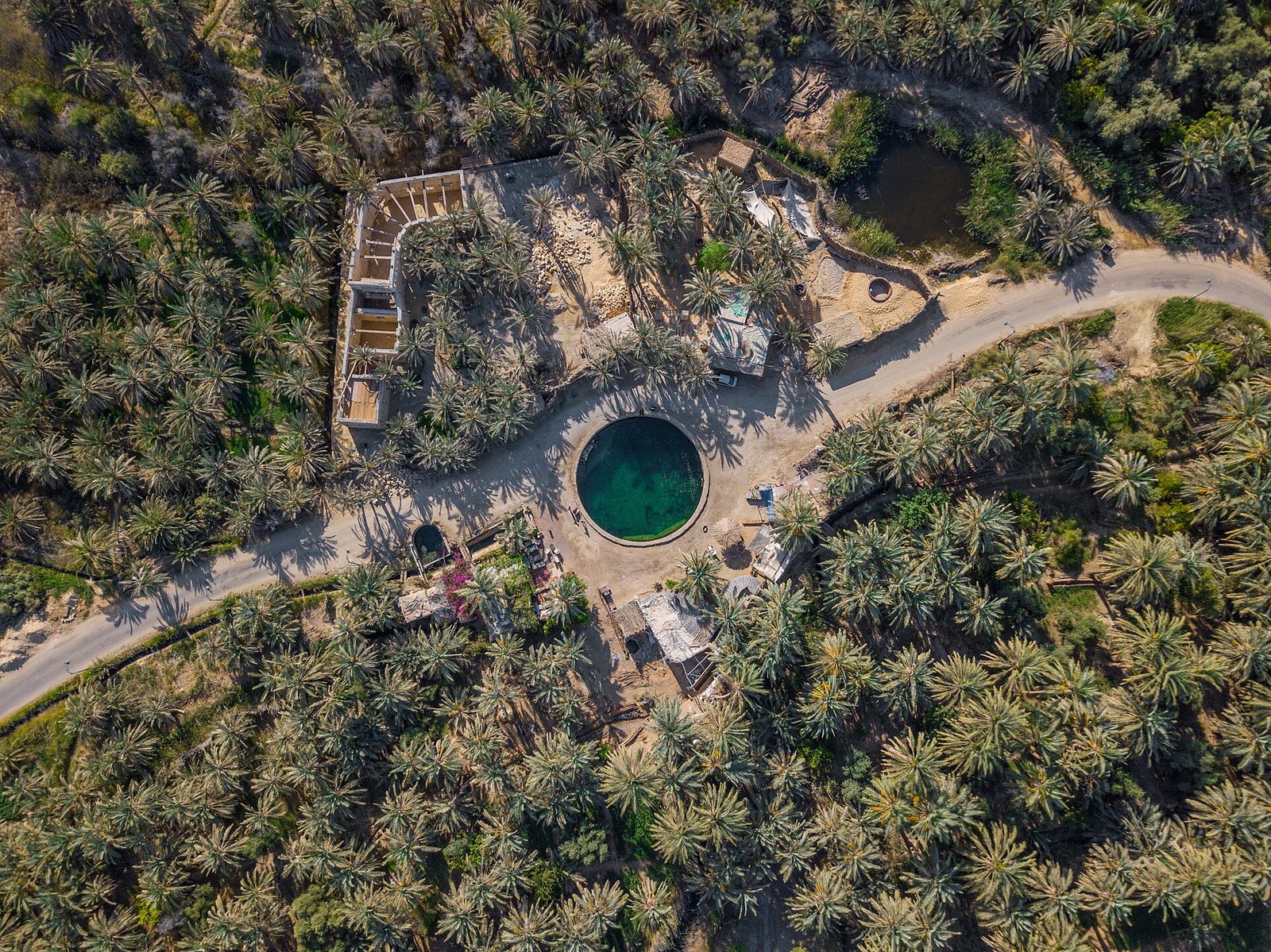
On the road to the oracle is a circular stone pool of clear water bubbling up from the ground, signposted as Cleopatra's Bath. The name is pure marketing; there is no evidence she came within a hundred miles. Ancient writers did describe a spring here that ran warm at night and cool by day, and this is probably it.
You can swim, and locals do. Women should go in covered, with a T-shirt and shorts over a swimsuit, because this is a public pool in a conservative town and the men of the village use it too. Your lodge will usually have a quieter spring of its own.
The salt lakes, and how to float in them without regret
Because the oasis floor is below sea level and the sun evaporates water faster than the springs replace it, Siwa has two big saline lakes and a chain of small pools around the salt workings on the eastern side. The water in the small pools is so dense that you float on your back with no effort, like the Dead Sea, turquoise against banks of white crystal.
The pools are shallow, the crystals are sharp and there is no shade, so it is a half-hour stop in late afternoon light. A few rules from experience:
- Do not put your face in. The water stings badly in the eyes.
- Do not go in freshly shaved or with any open cut.
- Rinse with fresh water straight afterward. Your driver carries a jerrycan for exactly this.
- Wear water shoes. Bare feet on the crystal bank is a mistake you make once.
Fatnas island at sunset, and the dates and olives that feed the oasis
Fatnas is a small island of palms on the eastern shore of Birket Siwa, reached by a causeway, with a cafe under the trees and a spring pool. Every visitor in the oasis ends up there at the same hour, and you should too. The sun drops behind the lake and the far escarpment, the water turns copper, and someone brings mint tea.
The whole oasis runs on two crops. Siwa dates are considered the finest in Egypt, and the October harvest fills the roads with pickups stacked with fruit. The olives are pressed into a peppery oil that has started reaching delicatessens in Cairo. Ask your driver to stop at a family press in season; they will hand you something to taste. It is one reason Siwa belongs on any list of experiences you cannot have anywhere else in Egypt.
The Great Sand Sea safari: dunes, sandboarding, a hot spring and a cold lake
South of the oasis begins the Great Sand Sea, a dune field the size of a US state that runs into Libya with nothing in it. The standard Siwa safari takes you into its first fringe in a 4x4 driven by a Siwan who learned the dunes from his father, and it is the best afternoon of the trip.
You leave after lunch, the driver lets the air out of the tires at the edge of the sand, and for an hour you ride crests that look vertical from the seat. Then he stops at a steep face and pulls out sandboards. You climb, you ride down on your feet or your backside, you climb again. Nobody has ever needed a lesson.
From there he takes you to Bir Wahed, a spring in the middle of the dunes that fills a stone pool with hot water beside a small cold lake ringed with reeds. You swim in the cold one, warm up in the hot one, and sit with tea while the sun sets over sand in every direction.
The Great Sand Sea is a controlled zone and the driver arranges the permit in advance. For the full version, ask for an overnight camp among the dunes.
Getting to Siwa, and why three nights is the honest minimum
There is no scheduled commercial flight to Siwa. You arrive by road, and the road is long. From Cairo the route runs northwest past Alamein to the coast at Marsa Matruh, then south through empty desert for another 190 miles. With a driver who knows the checkpoints, the drive becomes part of the trip: Alamein, the blue water at Marsa Matruh, the escarpment dropping into the oasis.
| Starting point | Approximate drive | How we usually plan it |
|---|---|---|
| Cairo | 9 to 10 hours | Leave at dawn, lunch on the coast, arrive for sunset at Shali. Or split it with a night in Alexandria. |
| Alexandria | 8 to 9 hours | A natural pairing: Alexander's city, then the oracle that made him a god. |
| Marsa Matruh | About 4 hours | Best in summer, when the coast is the reason you are up here anyway. |
| Bahariya Oasis | A full day on a desert track | Only with a 4x4 convoy and a permit. Ask us; it depends on the season. |
Now the arithmetic. Two of your days are the road. With two nights you get one full day and you will rush the oracle, Shali, the lakes and the dunes into a blur. With three nights you get two full days: one for the town, tombs, springs and Fatnas, one for the Great Sand Sea. On a three-week Egypt itinerary Siwa slots in cleanly after Alexandria; on anything under two weeks it is a hard choice against Abu Simbel, and we will tell you honestly which fits.
When to go: the seasons in Fahrenheit and Celsius
Siwa is a desert depression, so it swings harder than the Nile Valley. The season that makes sense runs from October to April. Summer is possible but brutal, and the useful hours shrink to dawn and dusk.
| Months | Daytime high | Night low | What it means for you |
|---|---|---|---|
| October and November | 80 to 90 F (27 to 32 C) | 55 to 65 F (13 to 18 C) | The best window. Date harvest, warm lakes, cool nights in the dunes. |
| December to February | 65 to 72 F (18 to 22 C) | 38 to 45 F (3 to 7 C) | Perfect days, cold nights. Bring a real jacket for the desert camp. |
| March and April | 75 to 90 F (24 to 32 C) | 50 to 60 F (10 to 16 C) | Warm and green, with a chance of a hazy sand-wind day. |
| May to September | 100 to 110 F (38 to 43 C) | 70 to 80 F (21 to 27 C) | Only for the committed. Springs at midday, dunes at sunrise and sunset. |
Ramadan slows the town in daylight, manageable with a guide but worth knowing before you fix dates. Our guide to the best time to visit Egypt covers how Siwa fits with the Nile and the coast.
What to wear and how to behave in a conservative oasis
Siwa is noticeably more conservative than Cairo, Luxor or any Red Sea resort. Siwan women rarely appear in public before strangers, and when they go out they are wrapped head to foot in the blue and white tarfottet shawl. That tells you the standard.
For visitors the rule is simple: shoulders and knees covered in town, always. For women, loose trousers or a long skirt and a top with sleeves. For men, long trousers and a shirt with sleeves rather than a tank top. At the lodge's private spring and in the dunes you can relax; at Cleopatra's spring and Fatnas, swim covered. Our guide to what to wear in Egypt has the packing list, and Siwa is just the modest end of it.
Do not photograph women, ever, and ask before photographing a man or a child. Alcohol is not sold in town and most lodges do not serve it. Cash is essential, because ATMs are few. Dressing with a little respect is what turns you from a tourist into a guest.
Where you sleep: mud-brick eco lodges, and what that actually means
Siwa has no chain hotels. The best places to stay are a category of their own: lodges built by hand from kershef and palm wood, set in the groves or against the edge of the dunes. The purist ones have no electricity at all, just oil lamps, thick walls that hold the cool and a spring-fed pool. Others add a fan, a socket and a hot shower and keep the same architecture. All of them give you silence, a rooftop for the stars and food from the groves around you.
Choose by two questions: electricity and Wi-Fi or a real disconnection, and in town or out among the palms. We do not list lodge names here because the good ones are small and change hands; we match you to one instead. Book well ahead for winter, because beds in Siwa are few.
How Explora Egipto builds a Siwa trip
We are a local agency in Egypt with our own guides and vehicles, and Siwa is a trip we run with a small circle of Siwan partners: the driver who knows the dunes, the guardian with the tomb keys, the family with the olive press.
- Day 1. Private car from Cairo or Alexandria at dawn, stops at Alamein and on the coast, sunset from the top of Shali.
- Day 2. The Temple of the Oracle early, the Mountain of the Dead, Cleopatra's spring, the salt pools, Fatnas island for sunset.
- Day 3. A slow morning in the market, then the Great Sand Sea: dunes, sandboarding, Bir Wahed, sunset on the sand. Optional desert camp overnight.
We fit that around the rest of Egypt: usually Cairo and the Pyramids first, Siwa in the middle, then a domestic flight from Cairo to Luxor or Aswan for the Nile. Our custom Egypt tour page explains how we build a route from scratch. Tell us your dates and how you like to travel, and we send you the quote.
Frequently asked questions
Is Siwa Oasis safe to visit?
The oasis itself is calm, welcoming and very low on crime, and the road from Cairo via Marsa Matruh is the normal patrolled route with checkpoints. The deep Great Sand Sea and the border strip are restricted, and you enter only with a licensed local driver and the permit he arranges.
Can you do Siwa as a day trip from Cairo?
No. The drive is nine to ten hours each way, so a day trip is physically impossible, and one night gives you nothing but the road. Two nights leaves you one rushed day. Three nights is the honest minimum: one day for the town, temple, tombs and lakes, one for the Great Sand Sea.
Is there an airport in Siwa?
There is an airstrip but no scheduled commercial flights you can book, and that has been the case for years. Everyone arrives by road from Cairo, Alexandria or Marsa Matruh. Plan Siwa as a road segment and keep domestic flights for Luxor or Aswan.
What did Alexander the Great do in Siwa?
In 331 BC he crossed the desert from the coast to consult the Oracle of Amun at Aghurmi. The priest greeted him as the son of the god, which confirmed him as legitimate pharaoh and fed the idea of his own divinity for the rest of his life. He never revealed what he asked.
Can you swim in the Siwa salt lakes?
Yes, and it is the classic photo: the small salt pools on the eastern side are so dense you float without effort. Keep your face out of the water, skip it if you shaved that morning or have a cut, wear water shoes on the crystal bank, and rinse with fresh water straight after.
What should a woman wear in Siwa?
Shoulders and knees covered in town, without exception: loose trousers or a long skirt and a top with sleeves. A scarf is handy for the sun and for entering a home but is not expected. Swim covered at public springs, with a T-shirt and shorts over a swimsuit, and dress as you like at the lodge's private pool or in the dunes.
Give the far west of Egypt the three nights it deserves
Tell us your dates, where Siwa fits in the rest of your Egypt trip and how you like to travel, and we come back with a three or four night plan: the private car from Cairo or Alexandria, the lodge that matches you, the oracle and the tombs with someone who has the keys, and the Great Sand Sea with a driver who was born here. No prices on this page, just a quote in your inbox.